Investigating the semantic evolution of the Qur'anic concepts of nation and ummah
Document Type : مقاله پژوهشی
Author
department of Social Sciences, University of Tehran,Tehran
Abstract
The two Quranic words Mellah and ummah have been interpreted as nation in later dictionaries. But none of them have been included in their original meaning. In the research, according to the characteristics of these two Quranic words at the time of revelation and in the Holy Quran and the coordinates and context of the relevant verses, with a historical approach, he investigated the process of changes created in the words Mellah and ummah, and the difference in the meaning of the two words due to cultural changes. Social and political Iran has been shown. As a result, the word Mellah in the Holy Qur'an is consistent with the meaning of method and way, and the word Ummah is used in the temporal participle of indicative with conditions. However, according to the approach of thinkers and history after the early centuries of Islam and the active concept of taking the word nation along with the original meaning of the word, the two words Mellah and Ummah have become close to each other to some extent. But from the Qajar period onwards and the era of constitutionalism, they have again distanced themselves from each other in meaning, and Ummah was applied to the Muslim community and Mellah was used to refer to the inhabitants of a special geographical land. nation also has a displacement of meaning and it is not appropriate to equate it with these two Quranic words Mellah and Ummah. The issue of sanctity in these two Quranic words and changing its conceptual approach is very important.
Keywords
قرآن کریم، ترجمۀ ناصر مکارم شیرازی. قم: دفتر مطالعات تاریخ و معارف اسلامی.
1. راموز، ادریس و احمدعلی قانع ( 1396)، "روش پیجویی مفاهیم مدرن در متون دینی (رابطۀ مفهوم امت در قرآن کریم و مفهوم فرهنگ)" ، دین و ارتباطات، شمارۀ 51.
2. احمدی، ظهیر (1388). "مفهومشناسی امت در قرآن کریم و اجتماع"، پژوهشنامه علوم و معارف قرآن کریم کریم، شماره 2.
3. آرلاتو، آنتونی (١٣٨٤). «درآمدی بر زبان شناسی تاریخی»، ترجمۀ یحـیی مدرسی. تـهـران: پژوهـشـگاه علـوم انسانی و مطالعات فرهنگی.
4. ایزتسو، توشیهیکو (١٣٦١). «انـسان در قرآن کریم» ،ترجمۀ احمد آرام. تهران: انتشارت سهامی.
5. پاکتچی، احمد (١٣٩٠). «درس گفتارهای نظریه فرهنگ». تهران: دانشگاه امام صادق(ع) .
6. راغـب اصـفهانی، حسین بن محمد (١٤١٢). «المفردات فی غریب القرآن کریم». بـیروت : دارالعـلم الدارالشامیة .
7. رضایی، فاطمه و مسعود مرادی (1395)، تحولسنجی مفهوم ملت در دورۀقاجار، پژوهشهای تاریخی ایران و اسلام، شمارۀ 19.
8. صدر، سید محمد باقر (1359). «انسان مسئول و تاریخ ساز از دیدگاه قرآن». تهران: بنیاد قرآن.
9. طباطبایی، محمد حسین (1369). «المیزان فی تفسیر القرآن». قم: اسماعیلیان.
10. طریحی، فخرالدین (١٣٧٥). «مجمع البحرین». تهران: کتابفروشی مرتضوی.
11. عبدالباقی، محدفؤاد (1369). «المـعجم و المـفهرس لألفاظ القرآن الکـریم». تهران: اسماعیلیان.
12. ------------ (1384 ). «المـعجم و المـفهرس لألفاظ القرآن الکـریم»، چاپ ششم. قـم: اسلامی .
13. علی بابایی، غلامرضا (1391). «فرهنگ سیاسی آرش». تهران: آشیان.
14. فراهیدی، خـلیل بـن احمد (١٤١٠). «کتاب العین». قم: هجرت .
15. قراملکی، احمد (١٣٨٥). «اصول و فنون پژوهش در گـسترۀ دین». قـم: مرکزمدیریت حوزۀ علمیه قم .
16. مشکور، مـحمدجواد (1368). «فرهنگ فرق اسلامی». مـشهد: بـنیاد پژوهشهای اسلامی آستان قدس رضوی.
17. مصطفوى، حسن )1430( . «التحقیق فى کلمات القرآن الکریم». بیروت: دارالکتب العلمیه.
18. مصلایی پور، عباس و ایوب پروینی (1396). "رسی تطبیقی مفهوم امت با تکیه بر آرای مفسران"، مطالعات تفسیری، شمارۀ 29.
19. مطهری، مرتضی (1366). «خدمات متقالب اسلام و ایران». تهران: صدرا.
21. --------- (1392). «بنیاد فلسفه سیاسی در ایران». تهران: مؤسسۀ تاریخ معاصر ایران.
22. نصار، ناصیف (1992). «مفهوم الامة بین الدین و التاریخ: دراسة فی مدلول الامة فیالتراث العربی الاسلامی». بیروت: دار امواج للطباعة و النشر و التوزیع: مکتبة الفکر الاجتماعی.
23. نوروزی خیابانی، مهدی (1387). «فرهنگ جامع لغات و اصطلاحات سیاسی». تهران : نشر نی.
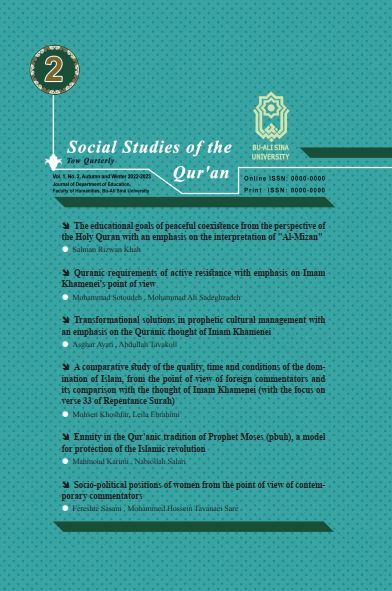
Volume 1, Issue 2 - Serial Number 2
September 2022Pages 140-156
- Receive Date 13 April 2024
- Revise Date 29 April 2024
- Accept Date 29 April 2024